

October 13, 2026
Almost Every Team Uses AI. High Performers Use It Securely and at Scale.
Crodox • 7 min read
Almost every engineering team now uses AI. Very few have turned it into a reliable advantage.
In 2026, the difference between average and high-performing teams is no longer whether they use AI coding agents. It is how. High performers treat AI like any other production system: the workflow must be repeatable, it must scale across teams and codebases, and it must be secure by design. Everyone else is still prompting and hoping.
This post looks at what the latest data says about that gap, and how Crodox helps enterprises with large codebases close it: secure AI with no IP leakage, and efficient AI that spends fewer tokens to get better answers.
Adoption is solved. Results are not.
AI coding agents have gone mainstream in record time. In JetBrains' Developer Ecosystem Survey 2026 of more than 15,000 professional developers (May - July 2026), 90% used AI coding agents at work at least weekly and 68% used them daily.
The tools are also changing fast. Claude Code went from about 18% workplace adoption in January 2026 to roughly 39% by mid-2026. Codex jumped from 3% to 16% in the same six months. Teams that built their process around one tool are already rebuilding it.
But usage is not the same as value:
- Trust lags far behind use. In Safeguard's April - May 2026 survey of 1,412 developers, AppSec engineers and engineering leaders, 91% used an AI coding assistant at least weekly, but only 34% trusted AI-generated code to be secure by default.
- More code does not mean more shipped software. An NBER working paper (May 2026, revised September 2026) tracked GitHub developers with real AI-usage telemetry. With autonomous agents, lines of code written rose roughly 17x, but releases rose only 1.3x (summary).
- Review is slipping. In the same Safeguard survey, as previously mentioned, 63% admitted shipping AI-suggested code without fully reviewing it. Only 26% work in organizations with a formal security-review policy for AI-generated pull requests.
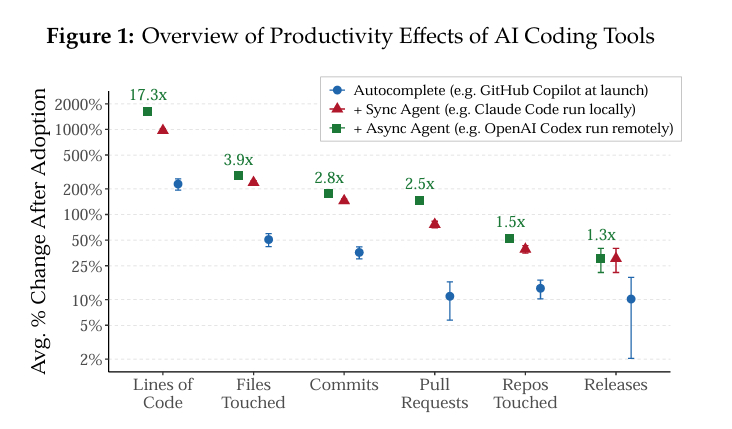
The pattern is clear. AI helps most on small, well-bounded tasks. It struggles on large, tangled, legacy codebases, which is exactly where most enterprise software lives.
Pillar 1: Secure. Your source code is the #1 thing leaking into AI
The most valuable asset a software company owns is its source code. It is also the data type most often sent to AI tools.
- Source code tops the list. Verizon's 2026 Data Breach Investigations Report analyzed 858,440 data-loss events involving uploads to generative AI tools. Source code was the most common data type, ahead of images and structured data.
- The volume is staggering. Zscaler ThreatLabz counted more than 410 million DLP policy violations from ChatGPT alone in 2025. Netskope reports that 47% of generative AI users access tools through personal accounts, with an average of 223 AI-related data policy violations per enterprise per month.
And approving a tool is no longer enough. Coding agents have become extensible runtimes with skills, plugins, hooks and MCP servers. In August 2026, The Hacker News summarized research that found critical issues in 13.4% of 3,984 public agent skills, roughly 7,600 malicious GitHub repositories (800+ posing as AI skills or MCP servers), and patched vulnerabilities in leading coding agents where repository configuration could trigger command execution and API-key theft.
The output side is no safer. Veracode's 2026 GenAI Code Security Report tested more than 100 models over four years: AI-generated code passed only 56% of security tasks on average, it has not moved. In Aikido's 2026 survey of 450 security leaders and engineers in Europe and the US, 69% had found vulnerabilities introduced by AI-generated code, and one in five reported a serious incident.
Pillar 2: Efficient. Every token now has a price tag
2026 is the year AI coding stopped being a flat fee. On June 1, GitHub Copilot moved every plan to token-metered AI Credits, where one credit equals one US cent and agent sessions draw down the pool. Cursor, Claude Code and Codex all bill heavy agent use by consumption. A single agent task can push 400K to 2M cumulative input tokens through the model.
The bills are following. According to Gartner research reported by Computer Weekly in June 2026:
- 23% of tech leaders already spend $200 - $500 per developer per month on coding-agent tokens.
- 6% of organizations pay more than $2,000 per developer per month.
- By 2028, Gartner forecasts AI coding costs will overtake the average developer's salary.
Large, old codebases are where context explodes. And Gartner's analyst told The Register there is no direct relation between rising token consumption and rising productivity. As per Gartner, AI coding bills leap from $20 or $100 to $2,000 to $5,000 per developer per month, while in extreme cases, the bill might hit $20,000 in token charges.
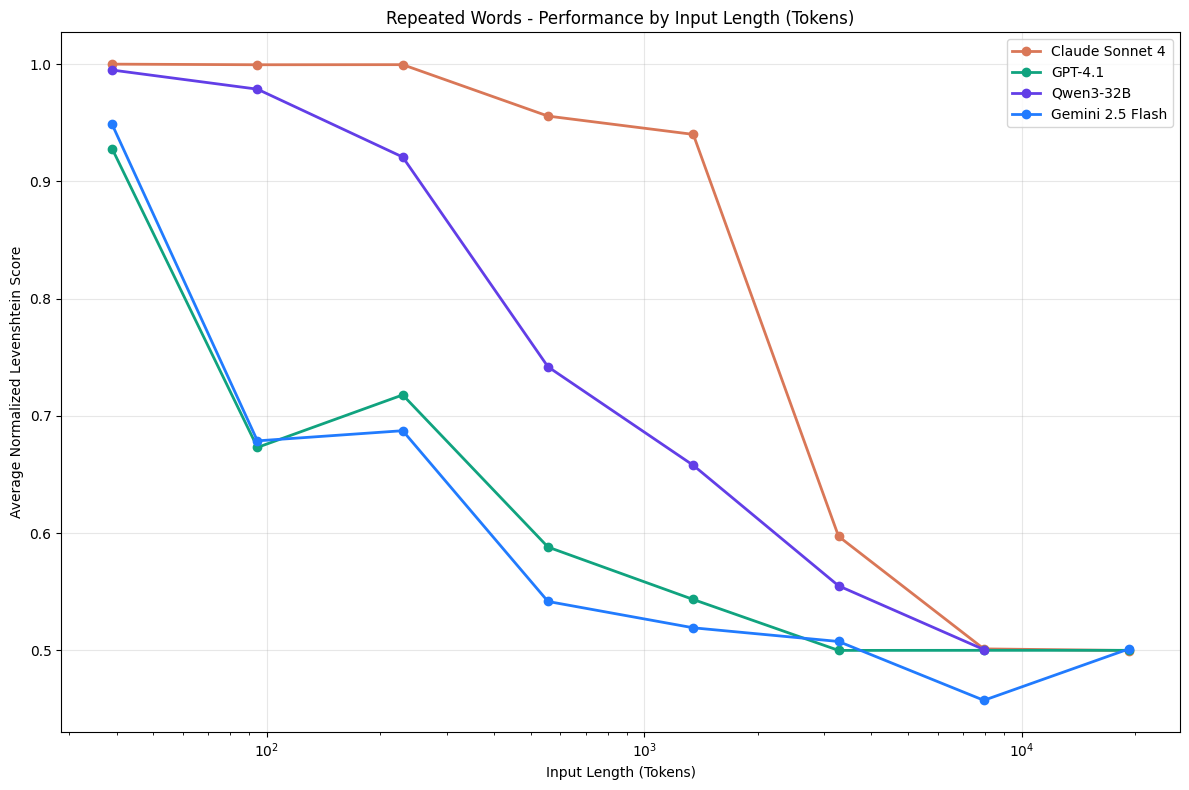
More context does not even buy better answers. Chroma's context rot research tested 18 frontier models and found every one of them got less reliable as input length grew, long before the context window was full. Irrelevant but similar-looking code, exactly what a large legacy repository is full of, makes it worse.
Pillar 3: Repeatable and scalable.
Most AI use today is individual craft. One engineer knows which files to paste, which instructions work and which model to pick. That knowledge does not transfer, does not survive a tool switch, and cannot be audited.
The data shows the cost:
- Only 13% of developers say AI agents have improved team collaboration, while 56% say it helped their personal productivity (SD Times, September 2026). The gains stay with individuals.
- Only 26% of organizations have a formal review policy for AI-generated pull requests. Without a defined input, there is no defined output to review against (Safeguard, 2026).
How Crodox delivers all three in one step
Crodox is a compiler-based code isolation platform built for enterprises with (large) codebases.
Instead of letting an AI agent wander through your repository, or relying on developers to copy-paste the "right" files, Crodox uses the compiler's own understanding of your code. It isolates exactly the code a task depends on, with its real dependencies resolved, and produces a minimal, self-contained unit. That unit, and only that unit, goes to the AI tool of your choice.
Secure
The problem today: Source code is the #1 data type uploaded to AI tools; agents can read whole repositories.
What Crodox changes: The model only ever sees the isolated slice. The rest of your codebase, and your IP, never enters a prompt.
Efficient
The problem today: Agents can burn 400K-2M input tokens per task; bills of $2,000+ per developer per month; accuracy drops as context grows.
What Crodox changes: A compiler-accurate, minimal context: fewer tokens, fewer credits, and less noise for the model to get lost in.
Repeatable & scalable
The problem today: Every engineer builds context by hand; results vary by person and tool.
Each engineer must go through a lengthy onboarding time.
What Crodox changes: Crodox extracts with its deterministic approach each time the same slice, 100% reliable and not probabilistic.
Crodox enables efficient AI usage and review.
Crodox enables efficient onboarding.
Because Crodox sits before the AI tool, it is not another assistant to bet on. Use Claude Code today, Codex tomorrow, an approved internal model next year: the isolation layer, your security boundary and your token savings stay the same.
The bottom line
The AI race in software engineering is no longer about access to models. Everyone has them. It is about who can use them on real, large, business-critical code without leaking IP, without runaway token bills, and with results the whole team can reproduce.
High performers have stopped asking "which AI tool should we use?" They ask "what exactly should the AI see?" Crodox answers that question with the precision of a compiler.
Interested? Book a demo and see how we can assist you.
Sources
- JetBrains: AI coding agent adoption 2026, via Quash statistics roundup
- Safeguard: AI trust report
- NBER Working Paper 35275: Writing Code vs. Shipping Code, VoxEU column and Medium summary
- SD Times: AI coding tools in mid-2026
- Veracode: 2026 GenAI Code Security Report
- Aikido: State of AI in Security & Development 2026
- Verizon DBIR 2026 analysis (Questa AI) and Tech Times
- Zscaler: Shadow AI data risk
- Adaptive Security: Shadow AI risks 2026 (Netskope data)
- The Hacker News: Shadow AI is now hiding inside sanctioned AI tools
- Computer Weekly: Gartner on AI coding agent costs
- The Register: AI coding agents could soon cost more than developers
- Digital Applied: GitHub Copilot AI Credits
- Morph: AI coding costs 2026
- Chroma Research: Context Rot